TRANSITIONS
Jesse Jackson
Oct 8, 1941 - Feb 17, 2026
The Rev. Jesse Jackson, larger than life, left this earthy plain
on February 17, 2026. He was one of the young proteges of Martin Luther King, Jr., and other SCLC Civil Rights leaders.
In his own right, Jackson headed up Operation PUSH/Rainbow Coalition, organizing people of color and poor people to make change.
Jackson had credible runs for the Presidency in 1984 and 1988. He famously popularized the statement, “I Am Somebody,”
which today continues to resonate dignity and agency of people who have been marginalized. He spread the message of the “Beloved Community,”
and inspired new generations to take up the mission he was instrumental in starting.
Society's newsletter available Online
May - Jun 2026
You may download the newsletter from the PDF reader
VIEW BLACK HISTORY MONTH 2026: A CENTURY OF BLACK HISTORY COMMMEMORATIONS, 70 YEARS of SERVICE TO SAN FRANCISCO
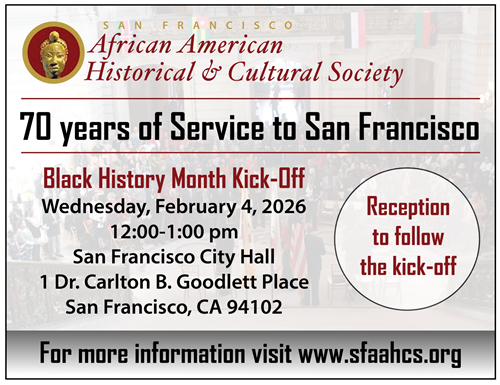
Who We Are
The San Francisco African American Historical & Cultural Society is open to people of all ages, races and ethnicities. Our mission is to educate African Americans and others about the history and culture of San Francisco's African American community. To do this, a variety of programs, events and exhibits are presented. The Society maintains an archive of historic and cultural items and a research library. Black History Month observances, including “kick-off” and theme-based programs are our keystone activity.
More at Mission and Collections.
THE SOCIETY IS MOVING
We have received an official notice from the AAACC managers that the Society must vacate its gallery and office at 762 Fulton Street no later than November 1, 2026. The City’s long anticipated retrofitting project will begin at the first of the new year and last between 18 and 24 months. The Board is seeking a suitable site. If you have any leads or suggestions, please contact us. As you can imagine this move entails arranging not only for another site, but, storage and moving of the Society’s belongings, including many pieces of art work and artifacts. Bear with us as we face this latest move.
Contact Us
We are located at AAACC, 762 Fulton Street, 2nd fl., San Francisco California, 94102
AAACC Information
The Society library and gallery are open Tuesday – Saturdays 1 – 5. It is best to call before visiting, 415-292-6172 or email Info@sfaahcs.org